Oh, darling, if you’ve graduated from “point the mic at your face and pray” to wondering why your last chapter sounds like it was recorded in a different postal code than the first, congratulations. You’re ready for the grown-up stuff. Advanced mic techniques for audiobook work aren’t about buying a $3,000 tube mic and calling it a day. They’re about treating the microphone like a scene partner instead of a passive listener. We’re talking pro microphone handling for narration that stays consistent for hours, audiobook mic artifacts avoidance that keeps ACX from sending you a polite “please try again” email, and nuanced capture tips for audio that make your voice feel present without sounding like you’re eating the capsule. Let’s get into it before your next session turns into a treasure hunt for the one take that didn’t pop, hiss, or wander.
In 2026 the bar is high. Listeners notice when the sound changes mid-book. Platforms notice when the noise floor or plosives sneak through. Your job is to make the technical disappear so the story can do the heavy lifting. These techniques are how you do that without losing your mind or your advance.
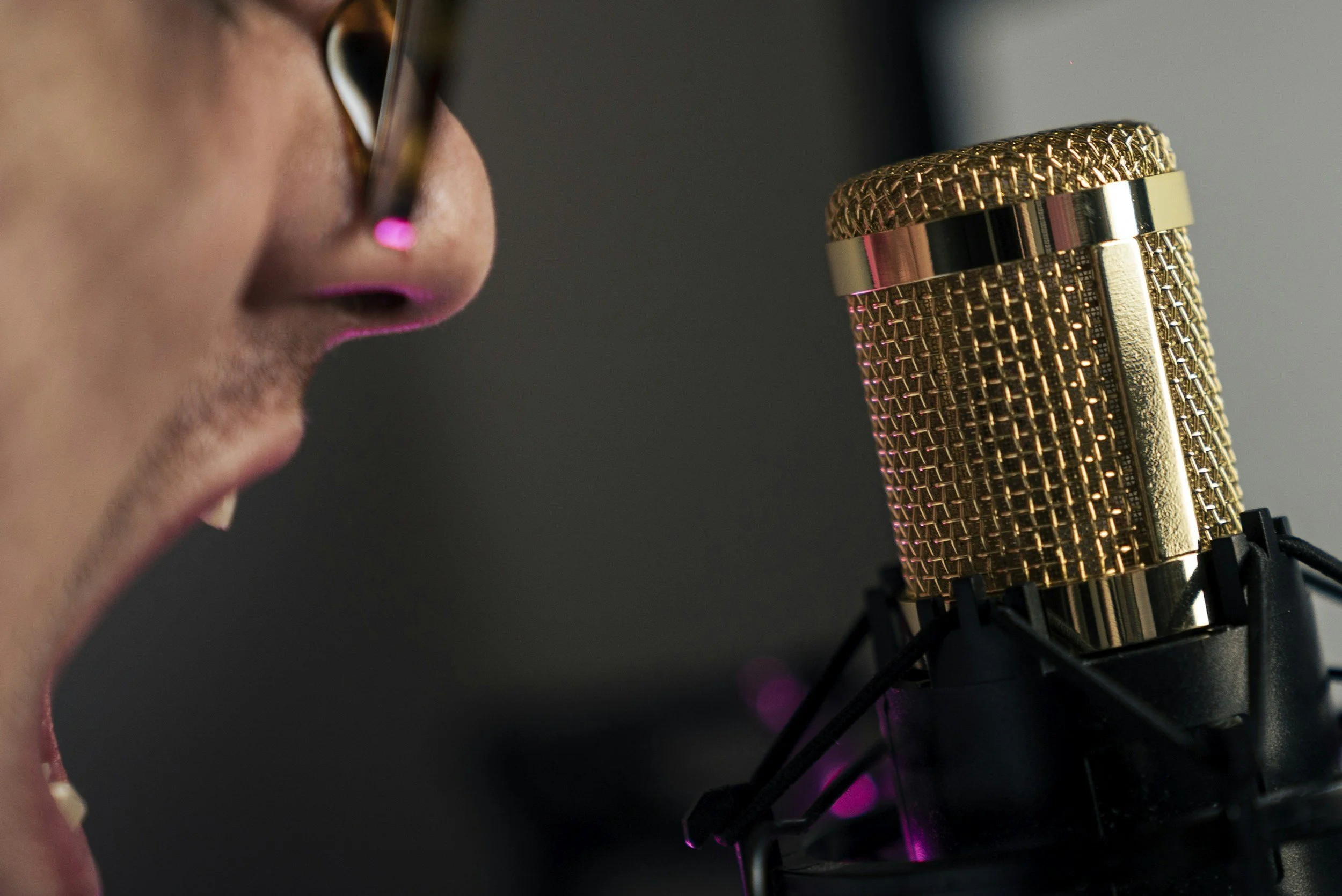
Why “Good Enough” Placement Stops Being Good Enough
A basic setup—mic on a stand, pop filter, six inches away—gets you in the door. Advanced work is about control. Small changes in distance, angle, and height alter proximity effect (that bass bloom when you get closer), sibilance, breath noise, and the amount of room you capture. Over a 10-hour book those tiny inconsistencies add up to “why does chapter 14 sound like a different person?”
Pro microphone handling narration means treating every session like a matching set. Same height, same angle, same distance, same gain. Mark your stand. Take a photo. Write it on a sticky note. Future-you will send present-you a thank-you card instead of a resignation letter.
Distance, Proximity, and the Bass That Won’t Quit
Proximity effect is both friend and saboteur. Get closer and the low end swells; pull back and the voice thins. For most narration you want enough warmth to feel intimate without the “talking into a sock” rumble.
Start 6–8 inches from the capsule for a large-diaphragm condenser. If the voice gets boomy on certain words (“book,” “power,” “boom”—the universe has a sense of humor), move back an inch or two or angle off-axis. If it sounds thin and distant, creep closer, but watch the plosives. Nuanced capture tips audio: use the proximity effect deliberately. A slightly closer position for quiet, confidential moments; a touch more distance for brighter, more open delivery. Just don’t change it every paragraph or the listener will notice the furniture moving.
Measure. A cheap ruler or a piece of tape on the stand is more reliable than “about this far.” Consistency beats vibes.
Angle and Off-Axis: Your Secret Weapon Against Artifacts
Speaking straight into the capsule is the fastest way to collect every plosive, every breath blast, and every “sss” that wants to slice eardrums. Angle the mic 15–45 degrees off-axis so the air from P, B, and T sounds misses the diaphragm while your voice still hits it. This is one of the cheapest, most effective pieces of audiobook mic artifacts avoidance you can learn.
Height matters too. Mic slightly above or below mouth level, pointed toward the mouth, often reduces nasal honk and catches less breath. Experiment in a test take: record the same paragraph on-axis, 30 degrees off, and slightly above. Listen on headphones and speakers. The winner is usually the one that sounds like a person talking, not a person attacking a microphone.
Pro microphone handling narration also means staying in that sweet spot. Lean in for emphasis and you change the tone. Train yourself to move less or compensate with small gain rides later. Better to stay put.
Polar Patterns and Why Cardioid Isn’t Always the Answer
Most audiobook work lives on cardioid: good rejection of the room behind the mic, decent proximity effect. But if your booth is well-treated, a supercardioid or hypercardioid can tighten the pickup and reduce reflections from the sides. If you’re in a less-than-ideal space, a figure-8 or even omni (in a very dead room) can sometimes sound more natural because it doesn’t color the voice as much.
Know your mic. A large-diaphragm condenser will be more sensitive to placement changes than a dynamic like an SM7B. Dynamics forgive distance variation and handle plosives better; condensers capture more air and detail but punish sloppy technique. Choose based on your room and your voice, then learn that mic’s personality. Nuanced capture tips audio include knowing when to switch patterns if your mic allows it—rarely necessary for narration, but useful if you’re recording in different spaces.
Killing the Usual Suspects: Plosives, Sibilance, Handling Noise
Pop filters are table stakes. Advanced work is about not needing them to do all the work. Off-axis placement plus a decent filter plus controlled airflow (the old “talk across the mic, not into it”) stops most plosives before they start. If a few sneak through, they’re easier to edit when they’re mild.
Sibilance loves high frequencies and close, on-axis placement. A de-esser in post is fine; preventing it at the source is better. Slightly off-axis or a touch more distance often tames the “sss” without dulling the whole voice. If your particular “s” is nuclear, a pencil or foam windscreen across the grille can help in a pinch—ugly but effective.
Handling noise is the silent career-killer. Never hold the mic. Use a boom or a solid stand with a shock mount. If you must adjust, do it between takes and wait a beat for the rumble to die. Cable management matters: loose cables transmit thumps. Secure them. Your future editor (even if that’s you) will not send flowers for the “chair squeak symphony” you left in.
Consistency Across Sessions: The Unsexy Superpower
The most advanced technique is boredom. Same mic, same position, same gain structure, same room treatment, same time of day if possible (voices change with fatigue and hydration). Take a reference photo or a short “slate” at the start of every session: “Chapter 7, same setup.” When you punch in three weeks later, match that photo.
Monitor with good closed-back headphones so you hear problems in real time. A little room tone at the top of each file helps matching later. If you change anything—new pop filter, different stand height—note it. Audiobook mic artifacts avoidance includes the artifact of “this chapter sounds like a different book.”
Testing Like a Grown-Up
Record test sentences that include your worst sounds: plosive-heavy words, sibilant names, whispered lines, shouted lines. Listen on multiple systems—headphones, phone speaker, car. What sounds rich in the booth can turn boomy or thin elsewhere. Adjust placement until it translates.
Keep a short “voice print” file from a good session. When something feels off, A/B against it. This is faster than guessing.
Common Advanced Mistakes (So You Can Skip Them)
Chasing “more presence” by getting too close. Result: proximity soup and plosives.
Changing position because the character “feels” different. Result: inconsistent book.
Ignoring the shock mount because “I don’t touch the stand.” You will.
Over-relying on plugins to fix what placement could have prevented. Plugins are makeup; technique is bone structure.
Wrapping It Up: Control Is the Real Luxury
Advanced mic techniques for audiobook pros are less about secret gear and more about repeating the same good decisions until they become invisible. Pro microphone handling narration, audiobook mic artifacts avoidance, and nuanced capture tips for audio all come down to this: know your mic, lock your position, listen critically, and stay consistent. Do that and your voice stays the star instead of the technical footnotes.
And if you’d rather spend your energy on performance instead of measuring inches from the capsule, Sounds and Such can take the technical load. They handle recording, engineering, and the kind of consistent capture that makes a finished audiobook feel seamless. Visit soundsandsuch.com for a quote—tell them this guide sent you and they’ll help your narration sound as polished as the story deserves.