Teachers know the look. A few students lean forward during a read-aloud, others stare at the page without turning it, and one or two have already checked out. Getting every learner into the same story at the same time is one of the hardest parts of literacy instruction. That’s where audiobooks in the classroom come in. Used well, they don’t replace reading—they widen the door so more students can walk through it.
Audiobooks help boost engagement with audiobooks at school by removing the decoding barrier for struggling readers while still giving everyone access to rich language, complex plots, and grade-level content. They also support comprehension in education settings when teachers pair listening with purpose, discussion, and print. This guide covers why they work, practical audiobooks student participation tips, and how to use them so listening turns into learning rather than background noise.
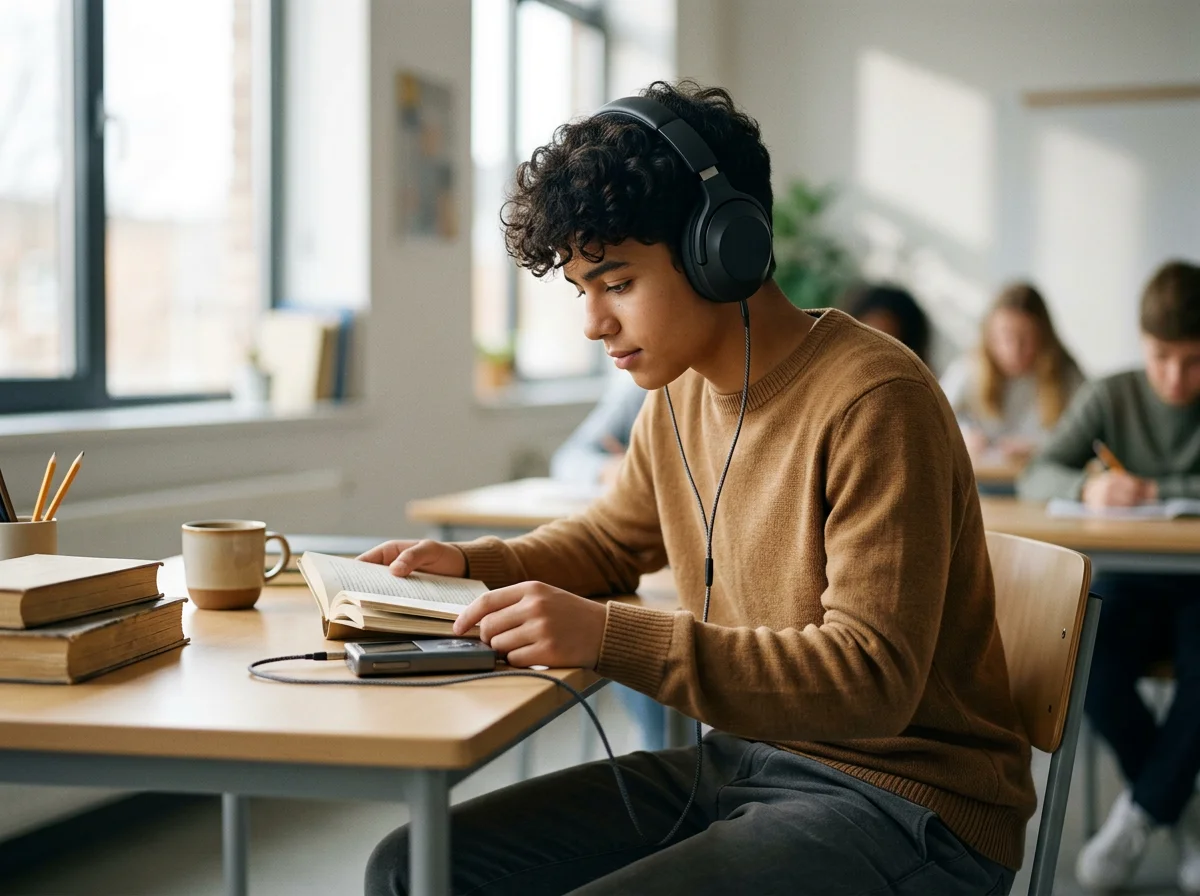
Why Audiobooks Belong in Today’s Classrooms
Listening to a well-narrated book uses many of the same comprehension processes as reading print: making inferences, tracking characters, building vocabulary in context, and visualizing. For students who decode slowly, the cognitive load of sounding out words leaves little energy for meaning. An audiobook lets them hear fluent reading while they follow along or simply listen, then join the conversation on equal footing.
Recent findings back this up. A 2026 MIT McGovern Institute study found that students gained vocabulary from text-supplemented audiobooks, with the biggest gains for poorer readers when listening was paired with explicit one-on-one instruction. National Literacy Trust data from the same period shows nearly half of children and young people listen to audiobooks or podcasts, and more than a quarter say audio sparks their interest in print books. For reluctant readers, English learners, and students with dyslexia or attention challenges, that spark matters.
Audiobooks also model what good reading sounds like—phrasing, expression, pacing, and pronunciation—that many students rarely hear at home. When the whole class shares the same audio experience, participation rises because everyone has the same access to the story.
Boost Engagement With Audiobooks at School: Start With Choice and Purpose
Engagement drops when listening feels like a worksheet in disguise. Give students some control. Offer a small menu of high-interest titles or let them pick from a classroom library of audio + print pairs. Series with humor, action, or strong characters (think graphic-novel adaptations or popular middle-grade adventures) keep minutes-listened high.
Keep sessions focused. Ten to twenty minutes of listening followed by talk works better than a full chapter with no response. Give a clear purpose before hitting play: “Listen for how the main character’s feelings change” or “Note three words that describe the setting.” Purpose turns passive hearing into active listening and immediately supports comprehension audiobooks education goals.
Whole-class use saves teacher voices and creates a shared experience. Play a chapter on classroom speakers, pause at key moments, and discuss. Small-group or center rotations work well too—one device and a splitter or several pairs of headphones let a station run independently while you work with another group.
Audiobooks Student Participation Tips That Actually Work
Participation improves when every student can contribute. Here are classroom-tested ways to make that happen:
Pair audio with print whenever possible. Students follow along in the book or on a projected page. This builds print-to-speech connections, supports fluency, and helps visual learners stay oriented. Many platforms highlight text as it is read.
Use graphic organizers or simple response sheets. A character-trait chart, prediction box, or “I noticed / I wonder” slip gives quieter students a way to show thinking without speaking first. After listening, they can share from their notes.
Try listen-then-read or read-then-listen cycles. Preview a tough chapter in audio so students have the plot and vocabulary before tackling the print. Or have them read a short section, then listen to the same passage to hear expression they might have missed.
Build discussion routines. Think-pair-share after a short clip, or assign roles (summarizer, questioner, connector). Because decoding is no longer the gatekeeper, more students have something to say.
Include movement or drawing for younger or restless listeners. Sketch the scene, act a short line of dialogue, or stand when they hear a specific word. These small actions keep bodies engaged without derailing the story.
For English learners, audio provides pronunciation models and natural rhythm that print alone cannot. Replay short sections and ask students to echo phrases or identify new words they heard.
Strengthening Comprehension With Audiobooks in Education
Comprehension grows when listening is not an add-on but part of the instructional cycle. Research consistently shows stronger results when audiobooks are combined with scaffolding rather than used in isolation—especially for students who struggle with print.
Before listening, activate background knowledge and preview key vocabulary. During listening, pause to check understanding or make a quick prediction. Afterward, have students retell, compare the audio performance to how they imagined the scene, or connect the text to another book or their own lives.
Cross-curricular use multiplies the benefit. A science unit on ecosystems can include a narrative nonfiction audiobook; a history lesson can start with a primary-source-style recording or historical fiction chapter. Students encounter academic language in context while still practicing listening stamina.
Track growth simply. Note who participates more in discussions, who chooses audio independently during reading time, or who asks for the print version after hearing a story. Those are engagement and comprehension signals worth celebrating.
Practical Setup and Common Pitfalls
You do not need a big budget. School library platforms such as Sora/OverDrive, Learning Ally (especially valuable for students with documented print disabilities), Epic!, and public-library apps like Libby give legal access. Classroom sets of durable headphones, a few extra devices, and a simple checkout system keep things running.
Common pitfalls are easy to avoid. Playing audio with no follow-up activity turns it into background noise. Using only audio for students who can read independently may reduce print practice they still need. Skipping licensing or using unofficial files creates legal and quality problems. And very long sessions without breaks lose even motivated listeners.
Start small: one listening center two days a week, or one shared chapter during read-aloud time. Expand once the routine feels natural.
Making Audiobooks Work for Every Learner
Differentiation is built in. Advanced readers can listen to more complex texts or compare narrator choices. Struggling readers access the same grade-level content their peers discuss. Students who miss class can catch up by listening. Absent students or those working at different paces stay included.
The goal is not to replace books. It is to give more students a successful, enjoyable entry point so they want to pick up the print version next. When a child who once avoided reading time now asks, “Can I listen to the next chapter?” engagement has already improved.
Classroom audiobooks work because they meet students where they are—some ready to decode, others ready to comprehend first—and then invite everyone into the same rich conversation. With clear purpose, paired print, and simple response routines, they become one of the most flexible tools a teacher can add.
And if you or your school is looking for professionally produced educational audiobooks, custom classroom titles, or high-quality narration that keeps young listeners hooked, the team at Sounds and Such can help. They specialize in audiobook production that meets both artistic and educational needs, from clear narration to finished files ready for school platforms. Visit soundsandsuch.com to learn more and request a quote—mention this classroom guide and they’ll help you bring stories to students in a format they can actually enjoy.