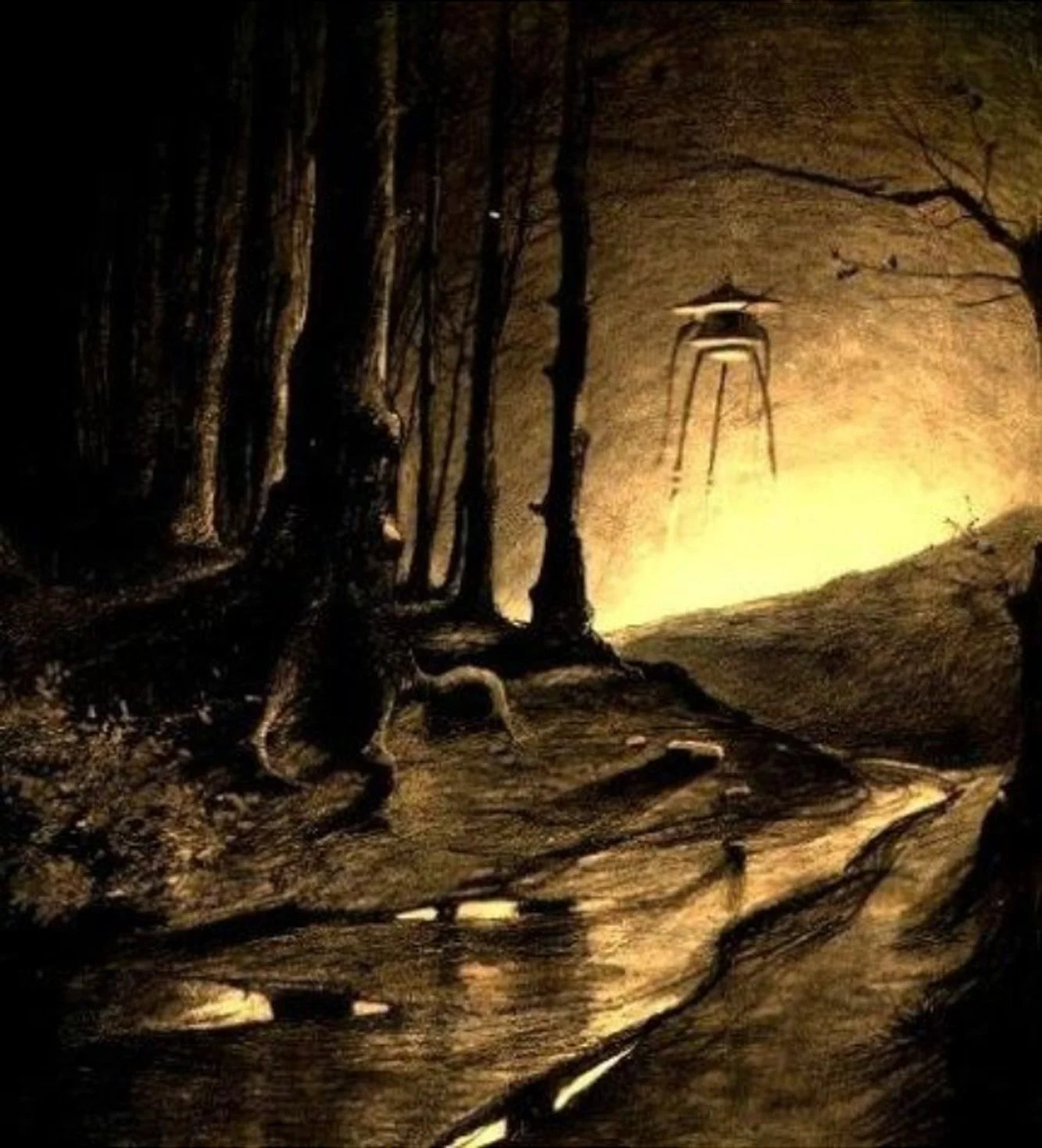
Illustration: Henrique Alvim Corrêa, 1906 (public domain)
Every Halloween, someone retells the story of the War of the Worlds radio broadcast 1938: Orson Welles reads a fake news report about Martians, America believes him, and people flee into the night clutching wet towels. It's a great story. It's also mostly not what happened. (Sorry. We know. We loved it too.)
What did happen is arguably more useful, especially if you're a narrator or indie author wondering whether your book deserves the full-cast, sound-effects, everybody-in-the-pool treatment. So grab a cocoa. No Martians were harmed in the making of this post.
What Actually Aired: The War of the Worlds Radio Broadcast 1938
On October 30, 1938, CBS aired an episode of The Mercury Theatre on the Air, a series that dramatized literary works. It was not a hoax. As Snopes puts it, the show was "a regularly scheduled and announced episode." The script was by Howard Koch. Welles, the director and star, was 23.
The twist was the format. Welles reworked H.G. Wells' novel into a faux newscast: a familiar music program interrupted by increasingly frantic news bulletins, with the action moved from England to New Jersey. Welles introduced the drama himself at the top and said it was fiction. Listeners who tuned in late missed that.
An hour after the show ended, WABC, which aired it in New York, issued a statement repeating "the fact, which was made clear four times on the program, that the entire content of the play was entirely fictitious." Four times. That's more disclaimers than most of us put in a contract.
The Orson Welles War of the Worlds Panic Myth
Here's what the evidence says.
Hardly anyone was listening. The night it aired, the C.E. Hooper ratings service phoned 5,000 households for its national survey. Only 2 percent named the Welles program or a radio play. The other 98 percent were listening to something else, or nothing at all. Welles was up against one of radio's most popular shows, Edgar Bergen's Chase and Sanborn Hour.
No verified deaths. Not one newspaper reported a verified suicide connected to the broadcast, and no specific death has ever been conclusively attributed to it. Researchers checked a rumor about shock cases at a Newark hospital and found it inaccurate. When they surveyed six New York City hospitals six weeks later, "none of them had any record of any cases brought in specifically on account of the broadcast."
So where did the panic come from? Two places. First, newspapers. Media historians Jefferson Pooley and Michael J. Socolow argue in Slate that the papers, which had lost ad revenue to radio, sensationalized the story to paint radio as irresponsible. Second, a 1940 book, The Invasion from Mars, by Princeton's Hadley Cantril. It estimated that about one million people were "frightened," based on a survey compiled six weeks after the broadcast. Pooley and Socolow say Cantril made "an obvious categorical error by conflating being 'frightened,' 'disturbed,' or 'excited' by the program with being 'panicked.'"
Were some listeners scared? Sure. But "frightened by a radio drama" is just called "a good radio drama."
Sound Design for Audiobooks: Four Tricks from 1938
Myth aside, the BBC sums it up well: the broadcast "demonstrated the early power and potential of radio." Here's what still works.
1. Use a format the listener already trusts. Welles borrowed the rhythm of a news bulletin, a structure his audience knew by heart. Today: match the conventions your genre's listeners expect (the pacing of a thriller, the warmth of a memoir) before you start breaking them.
2. Put the narrator inside the scene. The reporter character, Carl Phillips, describes the pit at Grovers Mill as it happens: "I'll give you every detail as long as I can talk. As long as I can see." Today: first-person and close POV narration lands hardest when the narrator performs from inside the character's moment, not from a comfortable distance.
3. Let sound carry the story. The script calls for a "HISSING SOUND FOLLOWED BY A HUMMING THAT INCREASES IN INTENSITY," then "SCREAMS AND UNEARTHLY SHRIEKS." The cues do the work no description could. Today: if you go dramatized, every effect should move the plot, not decorate it. Our guides to DIY sound effects and spatial audio and sound effects go deeper.
4. Silence is a beat. The most famous cue: "CRASH OF MICROPHONE ... THEN DEAD SILENCE." Nothing is scarier than nothing. Today: a well-placed pause after a reveal is free, and it's yours whether you have a 200-person cast or a single narrator. (Just make sure your silence is clean room tone, not a hum and a neighbor's leaf blower.)
Full Cast Audiobook Production: The Modern Mercury Theatre
The modern descendant of the Mercury Theatre is Audible and Pottermore's Harry Potter: The Full-Cast Audio Editions. According to Audible, they feature "over 200 actors," sound design in Dolby Atmos, original music, and real-world sound capture, with "over 2,000 recording hours logged to date" as of the October 2025 announcement. The first book debuted November 4, 2025, with one release a month through Deathly Hallows on May 12, 2026.
And listeners showed up: Pottermore Publishing reports "one million units sold of The Full-Cast Audio Editions in the first thirty days of sales." Notably, the full-cast editions sit alongside the single-voice recordings by Jim Dale and Stephen Fry, which remain available. Both formats get to exist. Nobody had to pick a side.
Audio Drama vs Audiobook: Which Does Your Book Need?
A quick vocabulary check. A traditional audiobook is one narrator performing the text. A full-cast or dramatized edition assigns characters to different performers and often adds music and effects. An audio drama, like the Mercury Theatre broadcast, adapts the story into a script built for the ear. All three are legitimate. They just cost different amounts of time, money, and coordination.
Dramatized Audiobook for Indie Authors: A Gut Check
You don't need 200 actors and Dolby Atmos to borrow from Welles. Here's how we'd think about it:
Genre. Sci-fi, fantasy, horror, and thrillers with big set pieces tend to benefit most from sound and multiple voices. Quiet literary fiction, memoir, and most non-fiction usually shine with one strong narrator.
Cast and dialogue. A dialogue-heavy book with a large cast is a natural fit for multiple narrators. A book that lives inside one character's head probably isn't.
Budget. More performers, more studio time, more editing, more sound design. Each one adds cost, so it's worth getting a real quote before you fall in love with the idea.
Timeline. Coordinating many performers takes longer than booking one. If you need the audiobook out alongside your print launch, factor that in. (Our post on multi-voice audiobook production and cast coordination walks through what that involves.)
The middle path. Dual narration, a few key effects, or simply a narrator who knows how to use silence can give you a lot of the drama for a fraction of the complexity.
Wrapping It Up
The War of the Worlds didn't fool a nation, but it did prove that voice, sound, and a well-timed silence can make listeners lean in. That's still the whole job, whether your cast is one narrator or a few hundred.
Not sure whether your book wants a single narrator, a full cast, or something in between? Tell us about it. Every Sounds and Such project is quoted individually, and we reply to quote requests within 24 hours. Get a quote, and let's figure out what your story should sound like.